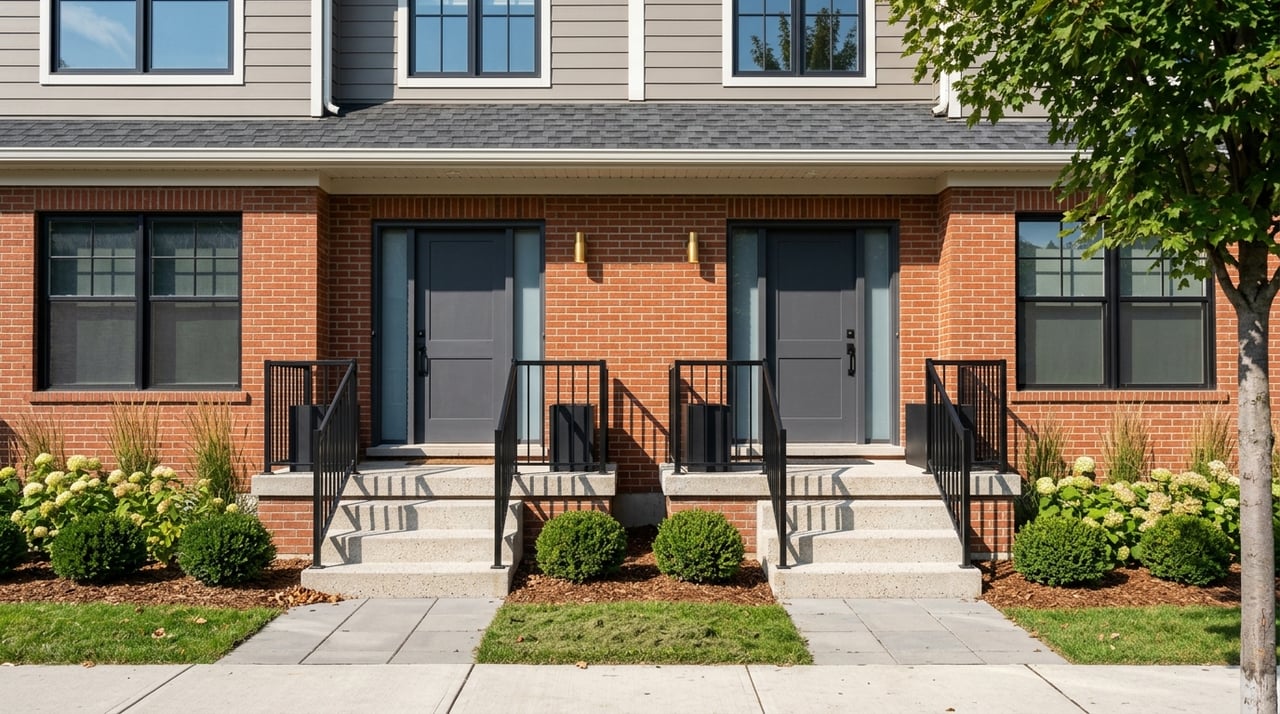
What to Know About Indianapolis Condo & Townhome Living
June 11, 2026
June 11, 2026
If you want less exterior upkeep without giving up access to the parts of Indianapolis you enjoy most, condo and townhome living may be worth a closer look. For many buyers, the appeal is simple: spend less time on yard work and more time enjoying nearby dining, trails, entertainment, and everyday convenience. If you are weighing the pros, costs, and tradeoffs, this guide will help you understand how condo and townhome living works in Indianapolis and what to look for before you buy. Let’s dive in.
Indianapolis offers a wide range of attached housing options, and the market gives buyers room to compare. March 2026 data shows Indianapolis as a buyers’ market, with a median listing price of $255,000 and about 4,781 homes for sale. That inventory included 437 condos and 65 townhomes, which makes attached housing a meaningful, though smaller, part of the local market.
That smaller inventory matters because condos and townhomes often serve a different goal than a traditional detached home. In many cases, you are choosing location, convenience, and lower exterior maintenance over lot size. In Indianapolis, that trade can make sense in both urban and suburban-style settings.
MIBOR also reported that condo inventory in central Indiana rose 56.9% year over year, with a median condo sales price of $237,000 in June 2025. For buyers, that can mean more options and a better chance to compare communities, fees, amenities, and layouts before making a decision.
For many buyers, the biggest draw of condo and townhome living is access. Downtown Indianapolis offers one of the city’s densest concentrations of amenities, with more than 350 restaurants, bars, and coffee shops within a two-mile radius, according to Downtown Indy Alliance. The Indianapolis Cultural Trail also connects pedestrians and cyclists to major destinations and surrounding neighborhoods.
Several popular areas near downtown show why attached housing is often tied to lifestyle. Visit Indy identifies districts such as Mass Ave, the Canal and White River State Park area, Broad Ripple, and Fountain Square as key neighborhood destinations. Broad Ripple also connects to downtown through the Monon Trail and Red Line, which adds another layer of convenience for people who want mobility without depending on a long drive for every outing.
Pricing in these close-in areas also helps explain the appeal. March 2026 neighborhood data showed median listing prices around $405,000 downtown, $366,450 in Fountain Square, and $457,000 in Near Northside. Broad Ripple’s April 2026 snapshot showed a median listing price of $335,000, which reinforces the idea that attached housing can be a practical way to buy into a location you value.
Not every attached home is owned the same way, and this is one of the most important things to understand early. In Indiana, condominiums and homeowners associations are governed separately under Title 32, with Article 25 covering condominiums and Article 25.5 covering homeowners associations. That legal structure affects what you own, what the association maintains, and what your monthly costs may include.
With a condominium, ownership generally includes your individual unit plus an undivided interest in the common areas and facilities. A townhouse-style property may look similar from the street, but it could be set up either as a condominium or as a fee-simple property, depending on the recorded documents. In other words, two homes that look almost the same can come with very different ownership rules.
That distinction can influence insurance, maintenance responsibilities, financing, and resale questions. It is one reason buyers should confirm the property’s legal structure before they write an offer. A careful review up front can prevent confusion later.
The headline price is only part of the affordability picture. Condo or HOA dues are usually paid separately from your mortgage, and those dues can range from a few hundred dollars a month to more than $1,000 depending on the community and what is included. If you are comparing properties, it helps to look at the full monthly cost, not just principal and interest.
Association dues often help cover shared expenses such as landscaping, driveways, roofs, and other common structures or facilities. Some Indianapolis listings also show monthly condo fees that bundle certain utilities, such as water, sewer, heating and cooling, or trash service. Still, what is included varies by project, so it is important to verify the details for each property.
You should also ask whether there are any current or pending special assessments. These are extra costs that can be charged in addition to regular dues. They can affect your budget in a big way, especially if a building or community has major repair needs.
Condo financing can be a little different from financing a detached single-family home. Lenders may ask for HOA dues information when preparing loan estimates, and condo loans can be priced differently than standard single-family loans. That does not mean financing is out of reach, but it does mean you should plan around the total payment from the start.
Insurance is another area where buyers sometimes make wrong assumptions. Even if the association carries master coverage for common areas, unit owners still need their own insurance. The exact division of responsibility depends on the governing documents and the ownership structure, so it is smart to review those documents carefully.
A clear budget should account for all of it:
Indianapolis condo and townhome inventory spans a wide range of sizes and styles. Current listings have included everything from a 444-square-foot one-bedroom downtown condo to two-bedroom units in the 1,100 to 1,600 square foot range, as well as larger three-bedroom, three-and-a-half-bath townhomes around 2,400 square feet. That gives buyers options whether you want a simple lock-and-leave home or something with more room to spread out.
Amenities also vary widely from one building or community to another. Depending on the property, you may see features like balconies, secure parking, attached garages, storage, open floor plans, pools, fitness centers, clubhouses, rooftop spaces, lake access, or on-site maintenance. The key is to treat these as property-specific features, not guaranteed standards.
Another helpful point for buyers is that low-maintenance living is not limited to downtown. Current inventory includes attached housing in central areas, near Meridian, on the north and west sides, and in south and east suburban ZIP codes. That means you can often find condo or townhome options even if your ideal location is outside the urban core.
Attached housing often works well if your priorities center on convenience and simplified upkeep. You may be a first-time buyer looking for a manageable starting point, a busy professional who wants easier maintenance, a relocating buyer who values access to local amenities, or a downsizer ready to reduce exterior responsibilities. In each case, the value often comes from how well the home supports your lifestyle.
MIBOR notes that walkable, mixed-use neighborhoods are becoming a consumer preference, which lines up closely with demand for condos and townhomes in and around Indianapolis. If you enjoy being closer to trails, dining, entertainment, or everyday services, attached housing can be a strong fit. If you want more privacy, a larger yard, or fewer association rules, a detached home may still be the better choice.
The goal is not to choose the trendiest option. It is to choose the ownership style that makes your daily life easier and your budget more predictable.
Before you move forward on a condo or townhome, take time to review the details that shape both cost and ownership. The most important questions are usually practical, and answering them early can help you avoid surprises.
Use this checklist as a starting point:
These questions matter because the right condo or townhome is not just about the floor plan. It is about understanding the full ownership picture so you can make a confident decision.
In a market like Indianapolis, condo and townhome choices can differ a lot from one community to the next. Two properties with similar list prices may offer very different fee structures, amenities, ownership documents, and long-term costs. That is where experienced local guidance becomes especially valuable.
When you have someone helping you compare the fine print as well as the location, your search becomes clearer. You can focus on what fits your goals, whether that means lower-maintenance living downtown, a townhome in a close-in neighborhood, or a simpler next step as you downsize. With the right strategy, attached housing can be a smart and flexible option in Indianapolis.
If you are thinking about buying or selling a condo or townhome in Indianapolis, Sue Pfohl can help you evaluate your options, understand the details, and move forward with confidence.


Get assistance in determining current property value, crafting a competitive offer, writing and negotiating a contract, and much more. Contact Sue today.